LTi TESOL - Learn to teach English to speakers of other languages
  • TESOL Courses
    • Course Levels >
      • Preparatory Cert of TESOL
      • International Certificate
      • Certificate IV
      • Diploma
      • Dual TESOL Qualifications
      • Graduate Certificate
      • Graduate Diploma
    • Course Comparison
    • Entry Requirements
    • Course Outcomes
    • Timeframes & Assessment
    • Practical Placement
    • Recognition of Prior Learning (RPL)
  • Enrol Now
  • Online Courses
  • Course Fee
  • About us
    • Who is LTi?
    • Reviews & Testimonials
    • 5 most popular questions ​about TESOL
  • Locations
    • Worldwide - Online
    • Adelaide, SA
    • Brisbane, QLD
    • Gold Coast, QLD
    • Melbourne, VIC
    • Perth, WA
    • Sunshine Coast, QLD
    • Sydney, NSW
    • India
    • Iran
    • Turkiye
    • Uzbekistan
    • Vietnam
  • Resources
    • TESOL Resources
    • ESL Resources
    • Partnerships & Licensing
  • Current Students
    • Online Learning Tour
    • Change Your Details
    • Student Handbook
    • Feedback
    • Extensions
  • Replacement Certificates
  • Job opportunities
  • Contact Us

TESOL Resources

Online and printed resources mapped directly to Australian Government Accredited TESOL Courses.

LTi TESOL Publications

We have been at the forefront of TESOL since 1996, when we were the first organisation in Australia to receive Australian Government accreditation for a TESOL qualification.

​We have continued to refine and develop our resources and stay up to date with the latest TESOL industry practices. The high quality suite of TESOL resources and assessment are mapped directly to current Australian Government Accredited TESOL Courses and include:
  • TESOL Textbook titled TESOL Made Practical for All Situations (ISBN 978-0-9775324-1-4)
  • Certificate IV in TESOL Assessment Workbooks and Guides
  • Diploma of TESOL Assessment Workbooks and Guides
  • Graduate Certificate in TESOL Assessment Workbooks and Guides

The TESOL resources and assessment are available in both online and print. 

Our Courses and resources are used by Registered Training Organisations (RTOs) around Australia as well as globally, with partners and licensees both nationally and internationally.​
Licensee Orders
Picture
Digital copies of the LTi Course materials are provided FREE at no extra charge to all LTi students.

Printed copies are available for optional purchase if preferred.
​
Over
Organisations have used our TESOL Courses & resources
 

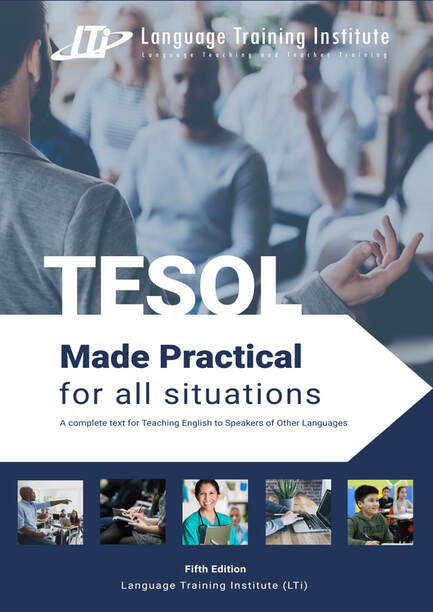
TESOL Textbook

Picture
​TESOL Made Practical for All Situations 
5th Edition, ISBN: 978-0-9871861-0-2
​

e-Book provided complimentary to all LTi students
Printed paperback available for purchase (optional)
​Regular Retail Price (RRP): $̶1̶1̶9̶ inc GST
LTi STUDENT PRICE (DISCOUNTED): $99 
inc GST + free postage within Australia

Special bulk order or licensee prices available on request
Order Now
BOOK SUMMARY ↓ (click to view)
TESOL Made Practical For All Situations is an educational textbook written for people from a diverse range of backgrounds, who are entering or participating in the profession of Teaching English to Speakers of Other Languages (TESOL). The companion volume, TESOL Made Practical For All Situations: The Workbook provides a step by step guide to applying the concepts presented in the textbook. 

The textbook content is intended to equip people for teaching English as a second language (ESL) or as a foreign language (EFL) in a variety of settings, ranging from situations in which there is a high degree of support (e.g. prescribed syllabus or course materials), to the opposite extreme where there is very little or no support. The textbook, as the name states, is intentionally practical in its goals, with both the language learner and the teacher in mind.

TESOL Made Practical For All Situations focuses on the practical or task-based learning needs that motivate language learning. People choose to learn English because there are practical tasks, requiring the use of English, that they need to complete. These practical tasks are the starting point for determining the process and content of language learning. 

The approach to language teaching and learning presented in this textbook is based on systemic functional linguistics theory. Readers will develop skills in analysing tasks and texts to identify the kind of language used to achieve specific social purposes. Drawing on genre theory, this approach increases awareness of the choices being made in every communicative transaction. The Workbook is packed with learning activities to assist in developing these foundational teaching skills.

The textbook is directed towards the practical goal of equipping teachers for the whole spectrum of teaching duties, from planning through to delivery and assessment. This textbook outlines how to identify learners’ needs and formulate them into learning goals, which in turn become the basis for a syllabus or training program. With this preparation, ESL/EFL teachers will be able to design training programs, and original materials, for any particular group of learners. In situations where the only directive given is as vague as, “Please, teach them English,” teachers will now have the skills to plan a purposeful and meaningful learning program with interesting and engaging activities.

TESOL Made Practical For All Situations also guides readers to recognise and exploit everyday texts for their potential use in language learning activities, thus reducing dependence on published materials that may not be easily accessed in remote teaching situations, or which may even prove to be culturally irrelevant or inappropriate. This practical training means teachers no longer have to be tied to a course book; they will be ready to enrich and expand, or diverge altogether.

This textbook embodies the core components of TESOL, then builds on those core teaching skills to delve into the diverse an specific global contexts in which English is taught.
TABLE OF CONTENTS ↓ (CLICK TO VIEW)
CHAPTER 1: Culturally inclusive learning environment
  • 1. Language and Culture 
  • 2. Cultural concepts embedded in language
  • 3. Language and Language learning 
  • 4. Learning styles and differences 
  • 5. Culture and Learning
  • 6. Practical tips for classroom teaching 
CHAPTER 2: English language and the Genre approach 
  • 1. Register
  • 2. Functional grammar
  • 3. Genre 
  • 4. Vocabulary 
  • 5. The Genre approach to TESOL 
CHAPTER 3: Teach English grammar
  • 1. Grammar and language learning 
  • 2. Overview of grammar concepts
  • 3. Syntax 
  • 4. Basic sentence structure 
  • 5. Cohesion 
  • 6. Punctuation 
  • 7. Procedure for teaching grammar 
  • 8. Grammar activities 
  • 9. Selecting suitable materials for teaching grammar
  • 10. Vocabulary building using grammatical structures 
CHAPTER 4: Teach spelling and pronunciation 
  • 1. Teach Pronunciation 
  • 2. International Phonetic Alphabet (IPA) 
  • 3. Standard or World English 
  • 4. Developing Intelligible pronunciation 
  • 5. Articulation & Voicing 
  • 6. Accent & Stress 
  • 7. Teach sound-spelling relationships 
  • 8. Terminology 
  • 9. Teaching Methods 
  • 10. Teach Spelling rules 
CHAPTER 5: Teach speaking 
  • 1. Spoken genres 
  • 2. Text analysis 
  • 3. Lesson planning
  • 4. Practice activities 
  • 5. Activity examples 
  • 6. The teacher’s role 
  • 7. Selecting materials 
CHAPTER 6: Teach listening 
  • 1. The listening skill 
  • 2. Listening strategies 
  • 3. Listening texts based on real life listening texts and situations 
  • 4. Techniques for practising a variety of listening skills 
  • 5. Overcoming listening challenges 
  • 6. Principles for teaching listening comprehension 
  • 8. Listening without written activities 
  • 9. Example listening lesson plan 
  • 10. Monitoring ESL learners’ listening 
CHAPTER 7: Teach reading 
  • 1. Foundational reading skills and conventions
  • 2. Authentic or adapted real-life texts 
  • 3. Evaluating Published materials 
  • 4. Reading for social purposes: tasks, texts and strategies 
  • 5. Learning activities to develop reading strategies and skills 
  • 6. Writing comprehension exercises 
  • 7. Critical literacy 
  • 8. Reading activities 
  • 9. Example reading lesson plan 
  • 10. Giving feedback and correction 
CHAPTER 8: Teach writing 
  • 1. Teaching foundational writing skills and conventions 
  • 2. Needs analysis 
  • 3. Analysing written texts 
  • 4. Planning a unit of work 
  • 5. Feedback and error correction 
  • 6. Selecting materials suitable for a range of levels 
  • 7. Example writing lesson plan and activities 
CHAPTER 9: Teach English using technology 
  • 1. Critical literacy 
  • 2. Benefits of using technology 
  • 3. Beginner digital literacy 
  • 4. Use internet based resources and activities 
  • 5. Assessment of online participation 
  • 6. ESL software 
  • 7. Teach word-processing skills 
  • 8. Select or design activities using technology 
  • 9. Mobile phone apps 
  • 10. Interactive Whiteboard 
  • 11. Creating a filing system 
  • 12. Strategies when teaching online 
CHAPTER 10: English teaching approaches and methods 
  • 1. Traditional approaches 
  • 2. Behaviourist Approaches 
  • 3. Cognitive Approaches 
  • 4. Learner-centred approaches 
  • 5. Communicative approaches 
  • 6. Postmethod Pedagogy 
CHAPTER 11: Design and teach English syllabus 
  • 1. Needs analysis for developing a task-based syllabus 
  • 2. Task analysis 
  • 3. Identifying language learning needs 
  • 4. Syllabus planning 
  • 5. Plan lessons based on communicative language learning methodology 
  • 6. Topic-based syllabus 
  • 7. Evaluation of Programs 
CHAPTER 12: Assessment of English language skills
  • 1. Assessment in ESL Contexts 
  • 2. Forms of assessment and types of evidence 
  • 3. Purposes of assessment 
  • 4. Validity, reliability, fairness and flexibility 
  • 5. Assessment design and administration 
  • 6. English language proficiency tests 
CHAPTER 13: Teach English for academic purposes 
  • 1. Streams within EAP 
  • 2. Develop listening skills for participation in academic contexts 
  • 3. Develop speaking skills for participation in academic contexts 
  • 4. Develop reading skills for participation in academic contexts 
  • 5. Develop writing skills for participation in academic contexts 
CHAPTER 14: Teach English for specific purposes 
  • 1. The purpose of ESP Programs 
  • 2. ESP programs breakdown 
  • 3. Developing a learning program in ESP 
  • 4. Suggested reading 
CHAPTER 15: Teach English to early childhood learners 
  • 1. Language use in the early childhood years 
  • 2. Planning a learning program 
  • 3. Monitoring and evaluating ESL learning 
CHAPTER 16: Teach English to primary school-aged learners 
  • 1. The learning context 
  • 2. General principles for teaching children 
  • 3. Needs analysis 
  • 4. Responding to language learning needs in planning learning programs
  • 5. Planning and implementing lessons 
  • 6. Giving instructions 
  • 7. Tips for behaviour management 
  • 8. Further background information 
CHAPTER 17: Teach English to teenage learners 
  • 1. TESOL with teenagers 
  • 2. Analysing the language use of teenagers 
  • 3. Creating a learning program 
CHAPTER 18: Use music, art and drama to teach English 
  • 1. Music 
  • 2. Art 
  • 3. Drama 
CHAPTER 19: Work with volunteers in English programs 
  • 1. Recruit volunteers 
  • 2. Train volunteers 
  • 3. Including volunteers in your program 
  • 4. Mentoring and monitoring 
  • 5. Avoid volunteer burn-out or abuse 
CHAPTER 20: Establish community-based English classes 
  • 1. Getting started: evaluating the need 
  • 2. Arrange a suitable venue 
  • 3. Arrange necessary equipment 
  • 4. Arrange insurance cover 
  • 5. Apply for funding 
  • 6. Recruit students 
  • 7. Recruit volunteers 
  • 8. Place ESL students into program 
  • 9. Manage the ESL program ​
AUTHORS & CONTRIBUTORS ↓ (CLICK TO VIEW)
© Language Training Institute, 2022
Original Author: Paula Withers
Contributed to & revised by: Rachel Brigg, Laura Higgins da Silva

By the turn of the new millennium (the year 2000) Language Training Institute (LTi) had become the first organisation in Australia to gain Government accreditation for a Certificate IV in TESOL (Teaching English to Speakers of Other Languages). Since that time LTi has also developed an accredited Diploma, Graduate Certificate, and Graduate Diploma, as well as the LTi International TESOL Certificate.

In association with the development of these Courses, LTi has produced high quality TESOL teacher training materials which are used around Australia and internationally by LTi and other education providers. 

TESOL Made Practical for All Situations was first published in 2005. The original author was Paula Withers who penned the earlier editions of the text at the invitation of LTi. Paula had gone to the Philippines to teach English in 1995 with limited experience after completing a short TESOL Course in Australia. Out of that experience and her ongoing commitment to the profession, Paula's belief in the value of practical, hands-on training became a perfect foundation for the delivery of the LTi English language teacher training courses. 

This most recent edition of ¬ includes valuable revisions and updates by Rachel Brigg, LTi TESOL Director; Laura da Silva, a senior LTi Course Trainer and Course Materials Developer; and Daria Cooper, LTi Editorial and Publishing Coordinator. 

The ongoing involvement of LTi staff, as well as feedback from representatives of other education providers delivering the LTi Courses within Australia and internationally, ensures that the text stays at the forefront of the global English language teaching profession.

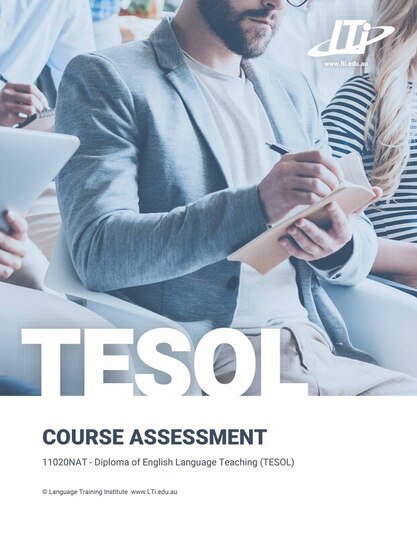
TESOL Made Practical for All Situations Workbook
Picture
The LTi TESOL Course Assessment Folder is a loose leaf publication (ISBN: 978-0-9871861-3-3) containing all the information and assessment required for a student to complete the LTi TESOL courses :
  • TESOL Study Guide
  • Workbooks
  • Practice Teaching Guide
​Note: The assessment folder is only available for purchase by students or licensees. ​It is not available for general public purchase.

​Special bulk order or licensee prices available on request
Student Price:
$89 inc GST
​+ free postage within Australia
Order

Online Learning Platform

The TESOL Online Student System (TOSS) guides students through the Course with through a series of tasks designed to develop and assess students' knowledge of TESOL. The robust system provides tutorial videos and facilitates online marking and feedback, videos of experienced teachers, sample lessons, etc. ​
Students have online access to everything they need to complete the course:

✅ Bite-sized training videos ranging from 2  - 20 minutes 


✅ Live tutorials available throughout the year + recorded sessions if you can't attend at the time

​✅ Downloadable tasks – in editable offline Word / PDF format

​✅ Sample English lessons and resources
​
​✅  Guideded tasks with the online platform available 24/7 

The full online resources are available to all enrolled students or through licensing and partnership options. 
Licensing & Partnership
Enrol Now
Picture

Licensing & Bulk Orders

LICENSING INFORMATION
Contact us for bulk orders
​e: [email protected]​
Ph: 1300 660 809
Enrol Now

Quicklinks

Course Content
Entry Requirements
Assessment 
Practical Placement

Course Outcomes
Class Locations
Online Distance Learning
Recognition of Prior Learning

Enrol Online
Change Contact Details
Request an Extension
​Frequently Asked Questions 

Contact LTi
About LTi
Order Resources (Partners & Licensees only)
​
Picture
Language Training Institute is a Division of Universal Education and Training Ltd. Ltd. ABN: 75 090 720086
Australian Registered Training Organisation (RTO No. 30173).

View website terms of use
Where this website states:
  • "Certificate IV" it is referring to the 11021NAT - Certificate IV in English Language Teaching (TESOL) qualification.
  • "Diploma" it is referring to the 11020NAT - Diploma of English Language Teaching (TESOL) qualification. 
  • "Grad Cert" it is referring to the 11057NAT - Graduate Certificate in English Language Teaching (TESOL) qualification.
  • "Grad Diploma" is referring to the 11058NAT - Graduate Diploma of English Language Teaching (TESOL)​ qualification
  • "International Certificate" it is referring to the non-accredited specialised International TESOL Certificate training course developed by Language Training Institute. ​ ​
  • "Preparatory Certificate" it is referring to the non-accredited specialised Preparatory TESOL Certificate training course developed by Language Training Institute. ​ ​
Memberships:
Picture
Picture
© Language Training Institute (LTi) with thanks to freepik.com and unsplash.com
  • TESOL Courses
    • Course Levels >
      • Preparatory Cert of TESOL
      • International Certificate
      • Certificate IV
      • Diploma
      • Dual TESOL Qualifications
      • Graduate Certificate
      • Graduate Diploma
    • Course Comparison
    • Entry Requirements
    • Course Outcomes
    • Timeframes & Assessment
    • Practical Placement
    • Recognition of Prior Learning (RPL)
  • Enrol Now
  • Online Courses
  • Course Fee
  • About us
    • Who is LTi?
    • Reviews & Testimonials
    • 5 most popular questions ​about TESOL
  • Locations
    • Worldwide - Online
    • Adelaide, SA
    • Brisbane, QLD
    • Gold Coast, QLD
    • Melbourne, VIC
    • Perth, WA
    • Sunshine Coast, QLD
    • Sydney, NSW
    • India
    • Iran
    • Turkiye
    • Uzbekistan
    • Vietnam
  • Resources
    • TESOL Resources
    • ESL Resources
    • Partnerships & Licensing
  • Current Students
    • Online Learning Tour
    • Change Your Details
    • Student Handbook
    • Feedback
    • Extensions
  • Replacement Certificates
  • Job opportunities
  • Contact Us